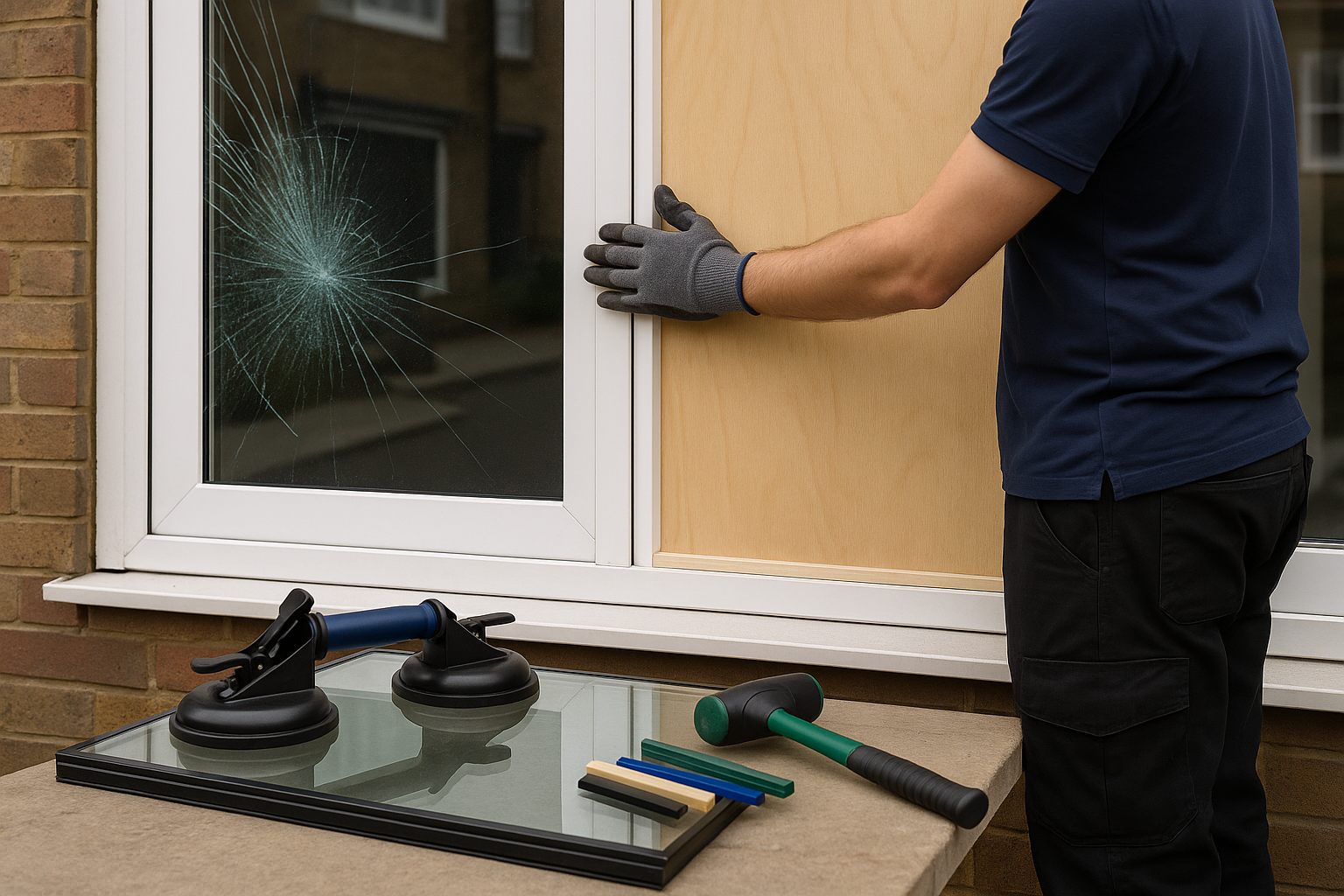
If you need boarding up Southwark SE1, the priority is simple: make the property safe, protect it from further damage, and keep access secure until the glass can be repaired or replaced. That applies whether the issue is a smashed shopfront near Borough Market, a broken sash window close to Southwark Cathedral, a damaged patio door by London Bridge Station, or a vacant property that has been left exposed overnight.
Glaziers SE1 provides a practical make-safe service for shops, landlords, property managers, homeowners and facilities managers across Southwark SE1 and nearby areas including London Bridge, Borough, Waterloo, Bermondsey and Elephant and Castle. The work is focused on the immediate problem first: loose glass removed where it is unsafe, the opening measured, and temporary boarding fitted so the building can be secured until the replacement glass is ready.
In glazing work, the difference between a quick cover-up and a proper make-safe is important. A board should be cut to suit the opening, fixed securely, and installed in a way that protects the frame and reduces the chance of further entry, weather damage or injury. If glass is cracked, shattered or hanging in place, do not try to pull it out yourself. Keep people and pets away from the area and arrange a visit.
Call 020 3519 1477 or request a visit today.
Emergency Boarding Up in Southwark SE1
Emergency boarding up is used when a window, door or shopfront has been damaged and the property cannot safely remain open. In Southwark SE1, that often follows break-in damage, vandalism, storm damage or an accidental impact. The aim is to create a safe temporary barrier so the building is protected while a permanent repair is organised.
For domestic properties, that may involve a broken casement window, a smashed uPVC panel, a damaged timber sash, or cracked glazing in a patio door. For commercial premises, it is often a shopfront or entrance door that needs to be secured quickly, especially where stock, equipment or public access is involved.
A proper emergency boarding visit usually starts with a visual check of the damage. Loose shards are dealt with carefully, the opening is assessed, and the right board size is prepared. If the frame has been distorted, or if there is damage to beading, seals or surrounding timber, that is noted so the next stage can be planned correctly. The point is not just to cover the opening; it is to make the area safe and usable until replacement glass is arranged.
Customers sometimes ask whether they should remove the broken pane themselves before help arrives. In most cases, that is not advisable. Even toughened or laminated glass can leave dangerous fragments, and hidden cracks can spread suddenly. A safer approach is to keep the area clear, avoid pressure on the glass, and wait for a make-safe visit.
Common emergency situations in SE1 include:
- Break-in damage to doors and ground-floor windows
- Storm damage to older timber frames and roof-level glazing
- Vandalism to shopfronts and communal entrances
- Vacant property security issues where a pane has been forced or broken
When you call, be ready to describe the type of opening, the extent of the damage, and whether the property is domestic or commercial. That helps the visit be planned with the right materials for a temporary security solution.
Shopfront Boarding in Southwark SE1
Shopfront boarding is a key part of make-safe work in busy parts of Southwark SE1, especially around Borough Market, London Bridge and the routes towards Waterloo and the South Bank. A damaged shopfront can leave a business exposed to theft, weather damage and interruption to trade. Temporary boarding helps protect the premises while replacement glass, frames or door components are organised.
Shopfront glazing is often larger and more exposed than domestic glass. It may involve single glazing, toughened glass, laminated glass or a glazed door system with transoms and side panels. Because the opening is part of the customer-facing frontage, the board needs to be fitted carefully so it is secure and as neat as the situation allows.
In practical terms, shopfront boarding may be needed after:
- A smashed display window
- Forced entry through a glazed entrance door
- Impact damage from a vehicle, bike or heavy object
- Vandalism that has left shards and a dangerous opening
Where possible, the damaged area is assessed for frame damage too. A shopfront may look like a glass-only issue, but the beads, seals, fixings and frame alignment can all affect the final repair. If the frame is still sound, the board can be fitted as a temporary measure until the replacement glazing is measured and specified. If the frame is compromised, that will need to be considered before the final glass is ordered.
For businesses in SE1, the goal is to reduce downtime and keep the frontage secure. Temporary boarding is not a substitute for the correct replacement, but it is the right step when the immediate priority is safety and protection.
Window and Door Boarding in Southwark SE1
Window and door boarding in Southwark SE1 covers a wide range of property types, from flats and terraces to commercial units, managed buildings and mixed-use premises. The approach depends on the opening, the frame material, and the type of glass that was fitted before the damage.
With sash windows, the issue is often older timber and glazing putty, which can be damaged when the pane fails. On casement windows, the beading and seals may need to be checked before a board is fixed. On uPVC windows, cracked double glazing units can sometimes leave the outer pane loose while the sealed unit remains in place. Timber doors and patio doors may need careful boarding to avoid further strain on the frame or locking points.
Useful signs that boarding may be needed include:
- Visible cracks running across the pane
- Glass rattling in the frame
- Missing or loose beading
- Water ingress after a storm
- A door that no longer closes securely after impact
At the visit, the opening is checked so the board can be cut to the right size. Measuring matters because a board that is too small can leave gaps, while one that is forced into place can damage the frame. In glazing work, a careful measure is part of the make-safe process even when the final replacement is not being fitted yet.
Customers also often want to know what type of glass they have before replacement. Common types include float glass, toughened safety glass, laminated glass and double glazed units. The right replacement depends on the opening, the use of the room, and any safety requirements. For example, a ground-floor door or shopfront will often need a different specification from an internal pane or an upper-floor window.
If the damage is in a flat, maisonette, office, retail unit or communal entrance, boarding can be arranged to restore security until the permanent glazing is measured and ordered.
Make-Safe After Break-Ins in Southwark SE1
After a break-in, the first priority is safety. Broken glass can be hidden in the frame, on the floor and in nearby fittings. A make-safe visit is about reducing immediate risk, securing the opening and helping the property move from an unsafe state to a temporary protected one.
For break-ins in Southwark SE1, the service may involve removing unsafe loose pieces, checking whether the frame or locking hardware has been forced, and boarding the opening to prevent further access. If the damaged opening is part of a door set, the lock, hinge alignment and surrounding joinery may also need attention before the site is secure.
This is especially relevant for:
- Shops and cafes near Borough Market
- Premises close to London Bridge Station
- Managed buildings and ground-floor flats
- Vacant properties needing temporary security
After a break-in, people sometimes want to clean up the glass immediately. That can be risky. Small fragments can be embedded in the frame or floor, and door glass can break in a way that leaves unstable sections hanging in place. The safer course is to keep the area closed off and arrange a make-safe visit.
Once the property is secure, the next stage is often measuring for replacement glass or a full repair. That may include assessing whether the original pane was standard glass, toughened glass, laminated glass or a sealed double glazed unit. The replacement choice matters because the wrong type can affect safety, performance and fit.
Glaziers SE1 uses local experience to help customers decide what comes next after the immediate make-safe. The focus is on practical advice, clear next steps and a temporary security solution that suits the property rather than a one-size-fits-all approach.
Temporary Security Until Glass Replacement in Southwark SE1
Temporary security is the bridge between damage and a proper replacement. In many cases, that means boarding the opening so the building remains protected while the correct glass is measured, specified and ordered. This is common when the original pane is a special size, a double glazed unit, a door panel, or a shopfront glass panel that cannot simply be replaced from stock.
In Southwark SE1, temporary security is often needed where the property must stay closed overnight, where a landlord needs to prevent access to an empty unit, or where a business wants to reduce the risk of further loss while trading plans are adjusted. The board provides a physical barrier, but it should be treated as temporary. Once the replacement glass is ready, the opening can be restored properly.
Customers should be aware that not every glass replacement is the same. A broken single pane in a timber sash window is different from a failed double glazed unit in a uPVC casement, and both are different again from a laminated shopfront panel or a glass door. The survey and measuring stage helps identify the right build-up, thickness and safety specification.
Typical unit and glass considerations can include:
- Single glazing versus double glazing
- Toughened or laminated safety glass
- Existing beading and frame depth
- Door hardware and opening clearances
- Whether the unit is misted, cracked, shattered or fully failed
Customers should not try to dismantle sealed units or remove shattered door glass themselves. Double glazed units are made from multiple components, and incorrect removal can damage the frame, the seals and the surrounding finish. In doors and shopfronts, the risk of injury is even higher because the glass can be under tension or supported by hardware that is already compromised.
For local support across Southwark SE1 and nearby areas such as Bermondsey, Waterloo, Borough, London Bridge and Elephant and Castle, Glaziers SE1 offers a straightforward make-safe and boarding up service. If you are dealing with break-in damage, a smashed shopfront, storm damage or a vacant property that needs securing, call 020 3519 1477 or email info@glaziers-se1.co.uk.
Recent work has included inspecting damaged patio door glass in London Bridge, making safe a broken pane in Borough, and replacing cracked door glazing in Waterloo. Those jobs show the same pattern: assess the damage, secure the opening, and plan the right repair or replacement after the temporary fix is in place.
If you need boarding up Southwark SE1 for a shopfront, window, door or vacant property, the best next step is to get the opening made safe first. After that, the correct glass type, unit construction and replacement method can be chosen with confidence.
Call 020 3519 1477 now for emergency boarding up, shopfront boarding, window and door boarding, or temporary security until glass replacement.